Practical information for Tanzania
Visas, health, money, tipping and packing, in one place.
Visa and entry
Most visitors need a visa for Tanzania. You can apply online through the official Tanzania Immigration eVisa portal before you travel. Fees and requirements depend on your nationality, so check them before booking flights. Your passport should be valid for at least six months from your arrival date and have blank pages.
Getting here
Most international visitors fly into Kilimanjaro International Airport (JRO), roughly 50 km from Arusha and about an hour by road. Arusha also has a small domestic airport used for scheduled flights to the Serengeti and Zanzibar. We collect you from JRO or your Arusha hotel at no extra charge on our standard itineraries.
Health and malaria
See your doctor or a travel clinic six to eight weeks before you travel. Malaria is present in most safari areas and most travellers take preventive medication. A yellow fever certificate is required if you arrive from a country with yellow fever transmission. Travel insurance with medical cover and evacuation is required for all our trips.
Money
The currency is the Tanzanian shilling (TZS), but US dollars are widely accepted on safari. If you bring US dollar notes, bring recent ones (2009 or newer) in good condition. ATMs are available in Arusha. Card payments in the national parks are limited, so carry some cash for tips and souvenirs.
Tipping
Tipping is not compulsory but is customary. As a general guideline, many travellers give the driver-guide about US$15–25 per day for the group and a smaller amount to camp and lodge staff. We provide a tipping guide with your final documents.
What to pack
- Neutral-coloured, lightweight layers (avoid bright colours and dark blue, which attract tsetse flies)
- A warm fleece or jacket for early morning game drives and the Ngorongoro rim
- Wide-brimmed hat, sunglasses, sunscreen and lip balm
- Comfortable closed shoes and sandals
- Binoculars, camera with spare batteries and memory cards
- Insect repellent, any personal medication and a basic first-aid kit
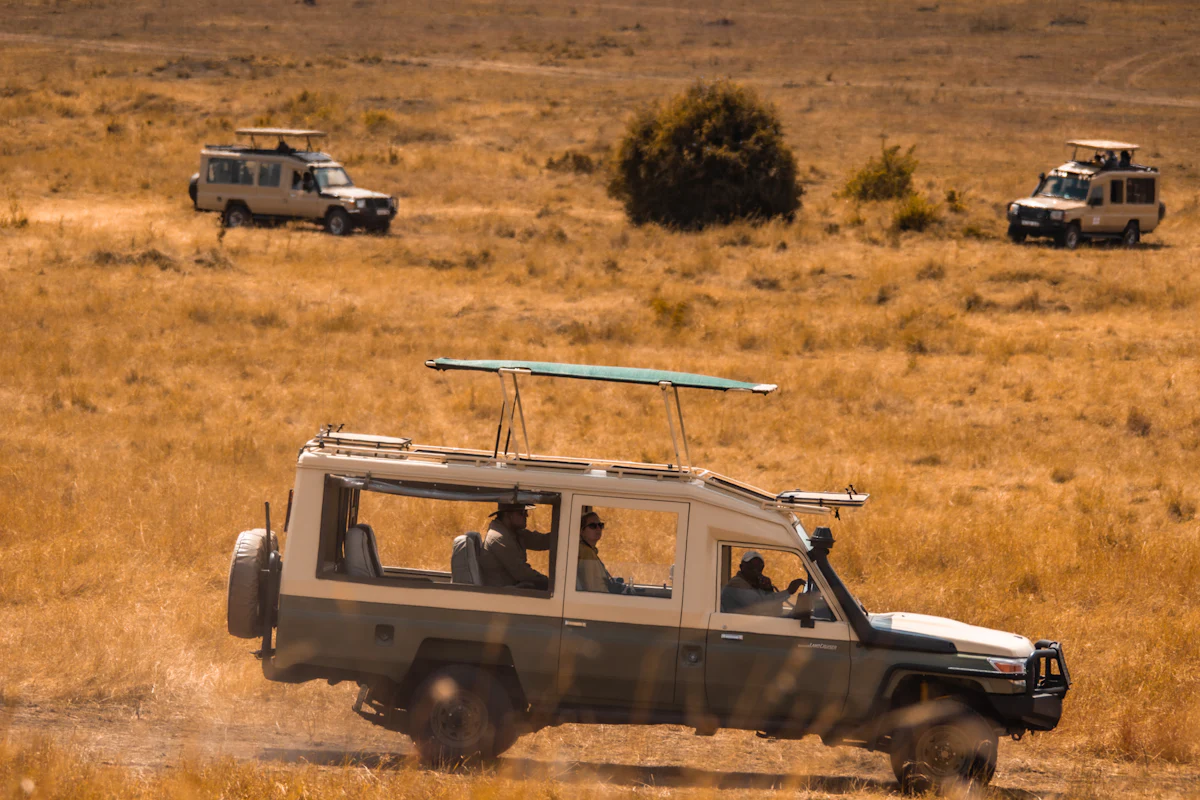
- Soft-sided bags (hard suitcases do not fit well in safari vehicles)
- Reusable water bottle. Plastic bags are banned in Tanzania; do not pack them.
Safety on safari
Safaris in Tanzania are safe when you follow your guide’s instructions. Stay in the vehicle during game drives, keep your voice low near animals and never feed wildlife. In towns, use normal precautions with valuables and travel at night only with a driver we arrange.
Photography and drones
Photography is welcome. Respect people’s privacy and ask before photographing local people. Drones require a permit and are not allowed in national parks without special authorisation, so please leave them at home.
Responsible travel
Park and conservation fees paid with every safari support the protected areas that safeguard wildlife. We encourage reusable bottles, staying on tracks, keeping distance from animals and supporting local businesses.
This is general information, not medical or legal advice. Check official sources and speak to your doctor before you travel. Last reviewed October 2026.